May 28, 2026
·Brandon Gustafson
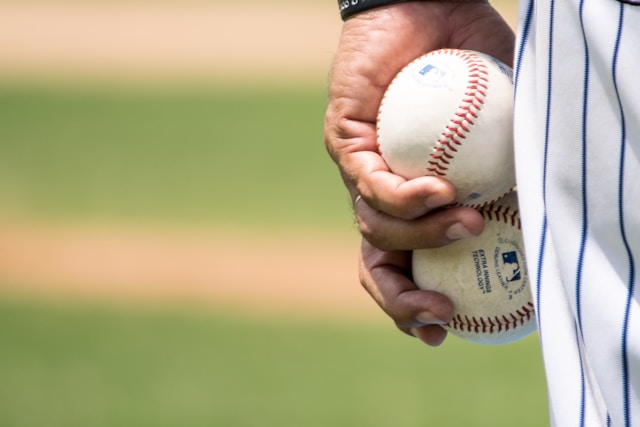
One of the most interesting races every MLB season is for the Rookie of the Year awards in each league. Luckily for baseball fans, this year features a loaded crop of youngsters who have established themselves as legit Rookie of the Year contenders in the early stages of the 2026 season.
As SeatGeek serves as the Official Fan to Fan Ticket Marketplace of Major League Baseball, we’ve been keeping a very close eye on all of the top rookies the game has to offer. With the month of May winding down, we’ve ranked the top five Rookie of the Year candidates in both the American and National League.
American League Rookie of the Year rankings
The American League race is headlined by two very different types of players: a home run-mashing slugger and a do-it-all shortstop. But with impact arms and catchers also in the mix, this group has already become one of the more compelling rookie classes in recent memory.
Chicago White Sox 1B Munetaka Murakami
Murakami came to MLB to do one thing – hit homers. And boy has the Japanese slugger been doing just that.
Yes, he strikes out a lot (78 in 55 games). No, he doesn’t hit for much average (.240). No, he doesn’t really get any hits besides singles or homers (three doubles, no triples). But boy is Murakami a dominant force with 20 home runs (first in the American League among the MLB leaders in home runs) while pitchers work around him to the tune of 42 walks and an on-base percentage of .375. I’ve written about it before, but he’s very Kyle Schwarber-like, and all Schwarber did last year was homer 56 times and finish second in MVP voting.
People dig the long ball – that’s a well-known fact by now. Murakami hits a ton of home runs and is on pace for well over 50 home runs as a rookie. Even if he hits in the .210-.230 range when it’s all said and done, he should be the guy to beat here assuming he clears 40 home runs and flirts with 50.
Detroit Tigers SS Kevin McGonigle
The top two players in my rankings could not be more different. Murakami hits dingers and walks. McGonigle is as well-rounded as they come, but he doesn’t hit the ball over the fence very often. But he does basically everything else exceptionally well.
Hit for average? McGonigle enters Thursday hitting .297. A good approach at the plate? McGonigle has more walks (32) than strikeouts (30). Speed? McGonigle has eight stolen bases. McGonigle also plays a premium defensive position at shortstop, and he’s a top-10 player in baseball when it comes to bWAR (3.2). Not bad for someone who doesn’t turn 22 until August.
There’s a legit case to be made for having McGonigle over Murakami, and if that’s your stance, you’re really not wrong. These two are off to excellent starts to their MLB careers, and it looks like the Tigers finally have a position player to build the club around in McGonigle.
Cleveland Guardians SP Parker Messick
Messick pitched very well over seven starts last year in his first taste of MLB action, and Cleveland’s lefty has been even better in 2026. In 11 starts, Messick has a tiny 2.24 ERA with 70 strikeouts to 19 walks over 64 1/3 innings pitched. His WHIP is a great 1.041, and he’s allowing just 6.7 hits per 9 innings. He’s been just rock solid all around, ranking good to great to elite in key metrics like strikeout rate, average exit velocity, hard-hit rate, barrel rate and chase rate.
While a lot of eyes were on Gavin Williams, Tanner Bibee and even Joey Cantillo to help anchor the Guardians’ rotation, it’s been Messick who has emerged as the go-to guy. He’s a massive reason why Cleveland is first in the AL Central and ranks in the top 10 in team ERA. It just goes to show how good this AL rookie class is that Messick is third in our rankings given what he’s done to begin 2026.
Baltimore Orioles C Samuel Basallo
Basallo was an interesting name to watch entering 2026 considering the Orioles had Adley Rutschman, but the former All-Star was coming off two dreadful offensive seasons. Rutschman has bounced back well with an OPS over .800 in 2026, so where does that leave Basallo? Well, the old adage is if you hit, you’ll play, and Basallo has hit well enough to earn starts behind the dish, at DH and even at first base to keep his bat in the lineup.
Basallo enters Thursday hitting .267 with an OPS over .800. The left-handed rookie has eight homers and 22 RBIs, too. The Orioles are again under .500, but that’s largely due to pitching struggles once again. Basallo looks like another franchise cornerstone that Baltimore needs after previous top hitting prospects have faltered in recent years. And as we’ve seen in 2026, the O’s will find room for Basallo given how well he’s hitting.
Toronto Blue Jays SP Trey Yesavage
There were a few good options here, such as Cleveland’s Chase DeLauter, recently called up players like Cleveland’s Travis Bazzana and Seattle’s Colt Emerson, or even another Toronto player in Kazuma Okamoto, but I opted for another pitcher in Yesavage.
First off, he’s been excellent after starting the year on the injured list. Through six starts, Yesavage has a 2.25 ERA and 35 strikeouts over 32 innings. He’s more than picked up where he left off when he was a go-to guy during the Jays’ World Series run.
And while he didn’t debut this year until April 28, that’s not enough missed time to take him out of the running here, especially if he continues to pitch that well. Many past Rookie of the Year winners don’t make their season or MLB debuts until May or June.
And that aforementioned World Series run will help Yesavage’s case. He was arguably the favorite for this award in the offseason before an injury cost him a month, so he’s sure to be front of mind for voters.
National League Rookie of the Year rankings
The National League field is a little more top-heavy at this point, but there’s still plenty of room for movement as the summer approaches. A few rookies have already separated themselves from the pack, while others are starting to build momentum after slower starts.
St. Louis Cardinals 2B JJ Wetherholt
Wetherholt is just a good, well-rounded ballplayer. The Cardinals second baseman has been fantastic to begin his career after dominating through the minors, and while his batting average of .234 may not stand out, he’s doing basically everything else well. Wetherholt has nine home runs, an on-base percentage of .351 as he works walks and also has been hit by pitches 10 times, and he has swiped six bags as well.
Additionally, while second base defense can be overlooked compared to other positions across the diamond, Wetherholt is in the 99th percentile in range (outs above average). He’s also on pace for over 7 bWAR and nearly 30 homers as a rookie. Not bad, kid.
Cincinnati Reds 1B Sal Stewart
Stewart started the year with his hair on fire, OPSing nearly 1.000 between March and April with nine home runs and a whopping 29 RBIs in 31 games. He looked like the early guy to beat in terms of Rookie of the Year voting in the National League as he was Rookie of the Month in April. But Stewart has cooled off in May with an OPS under .700 and three homers and seven RBIs, but he has an OPS over .800 over the last two weeks.
Overall, the Cincy slugger has 12 homers, 36 RBIs and an OPS well over .800 as he’s been the team’s best hitter not named Elly De La Cruz. Stewart’s 162-game pace for homers is 36, and his RBI pace is 105. That’s elite production for anyone, let alone a 22-year-old rookie. The Reds certainly have a good one in place for a long time, and he’s shown that at his peak, Stewart can be a top-end run producer in the middle of any lineup.
New York Mets SP Nolan McLean
A few weeks ago, McLean may very well have led these rankings. The New York right-hander entered May with a 2.55 ERA over his first six starts. Over his first nine starts, McLean hadn’t allowed more than three runs in a single outing in 2026. But he’s been roughed up of late, allowing 16 runs (13 earned) across nine innings over his last two starts, ballooning his ERA from 2.92 to 4.40.
Now don’t get me wrong – McLean is still awesome. I have a ton of confidence he’ll turn things around both this year, and in his career as a whole. Unfortunately for him, he has two incredible rookie hitters to contend with in the National League, and he’s seeing firsthand what a few bad starts can do to your numbers early in the season. But if McLean dazzles in June and enters July with an ERA in the low-3s or even in the 2s, I also wouldn’t be shocked.
Pittsburgh Pirates SS Konnor Griffin
The dropoff from the top three rookies in the National League to the rest of the pack is pretty steep, but there are still some very intriguing players in the mix, particularly across the NL Central. Griffin debuted at 19 and just turned 20 on April 24. Like many rookies, Griffin, the No. 1 prospect in baseball upon his debut, struggled. He hit .152 over his first 10 games. That’s hardly the case anymore.
Griffin is hitting .261 on the year now and is hitting nearly .300 over his last 40 games. Griffin is also among the fastest players in baseball, and he showcases elite bat speed, too. What’s hurting Griffin’s Rookie of the Year case is, outside of batting average and steals, he hasn’t done much. He’s homered just four times, has 14 extra-base hits and is OPSing just .716. The slug should develop over time – Griffin homered 12 times and had a slugging percentage of .527 in the minors last year – but that has yet to really showcase itself just yet. That Griffin is making a lot more contact and picking up hits is a good sign, though, and at some point, that contact rate should help translate into more thump. But also, Griffin is 20 years old. He’ll be just fine, even if he doesn’t win Rookie of the Year in 2026.
Chicago Cubs DH Moises Ballesteros
Ballesteros dominated down the stretch for the Cubs last year and did enough to earn postseason playing time. He hasn’t been quite as good in 2026, but an OPS of .749 with six homers and 20 RBIs is still pretty good.
I think Ballesteros will start to see his production tick up over the next few months. He ranks in the 79th percentile in average exit velocity, 90th percentile in hard-hit rate, 77th percentile in squared-up rate, 73rd percentile in barrel rate while ranking above average in walk and strikeout rate. At some point, the slug numbers should trend up – the data certainly points that way.
What hurts Ballesteros’ case, in addition to there being some other excellent rookies, is that he’s essentially limited to DH work. He can catch, but he doesn’t very often (two starts behind the dish this year). Ballesteros’ job is to hit, and he’s done a pretty good job. I think we’ll see his numbers be more great than good as the weather heats up.
📁 Categories: MLB
🏷️ Tags: Chicago Cubs, New York Mets, Cleveland Guardians, Chicago White Sox, Detroit Tigers, Baltimore Orioles, Toronto Blue Jays, St. Louis Cardinals, Cincinnati Reds, Pittsburgh Pirates